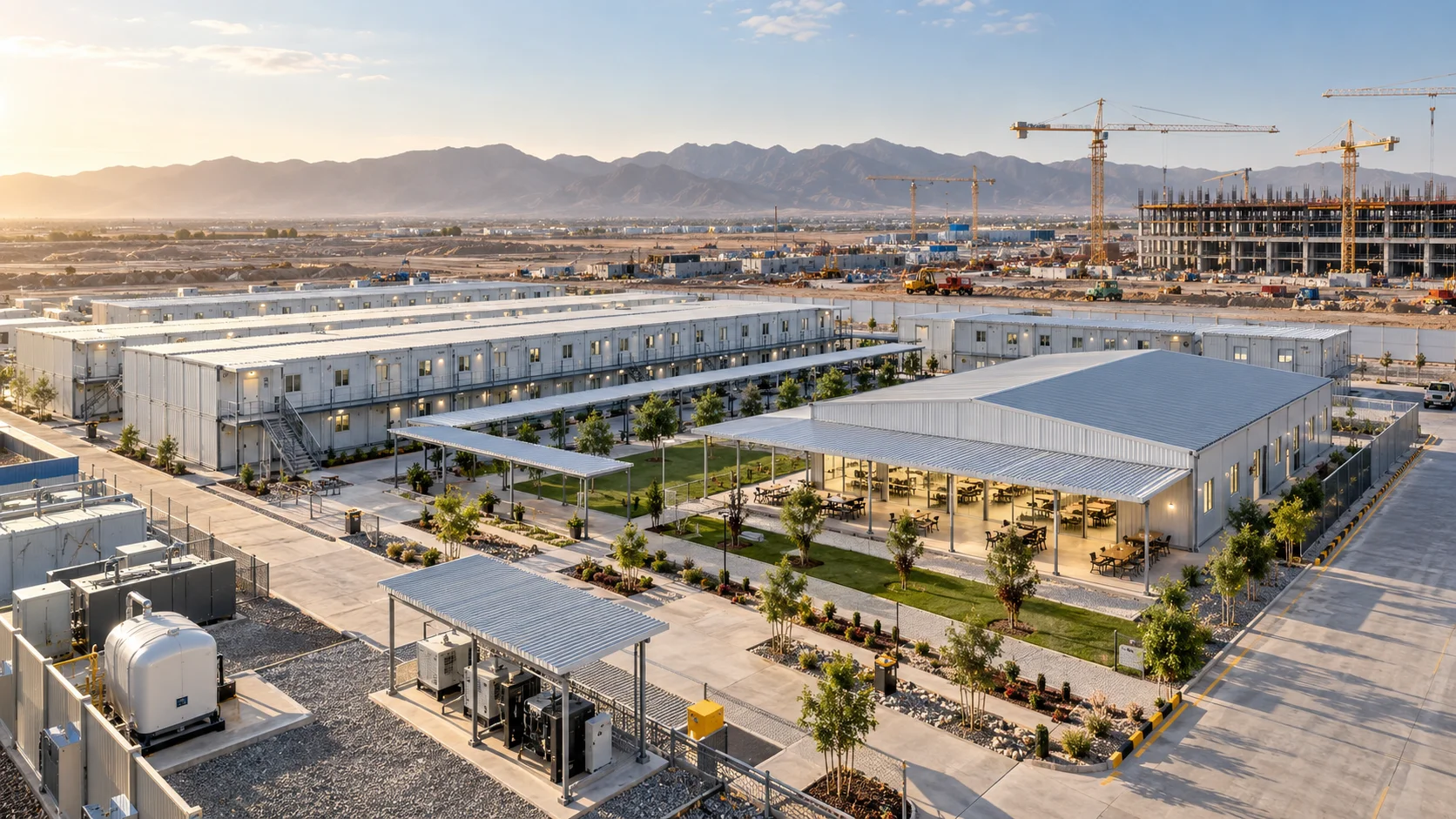
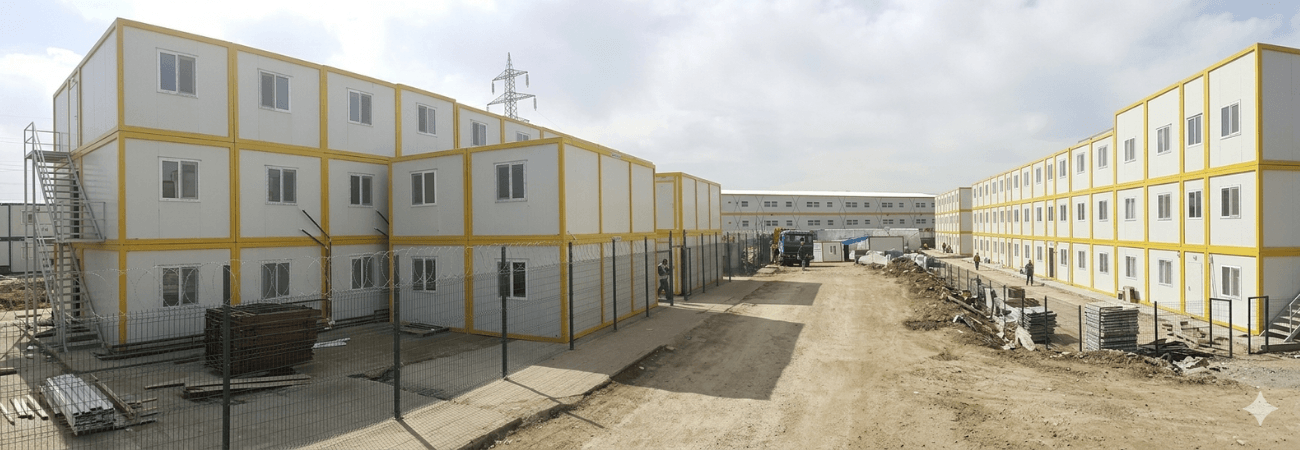
Prefabricated dormitory buildings are modular structures designed to meet the accommodation needs of personnel working on construction sites. Prepared in a factory environment, they are shipped to the site and can be installed in a short time.
Prefabricated dormitory solutions are widely used in construction projects thanks to their quick installation and cost control.
Features of Prefabricated Dormitory Buildings
Prefabricated dormitory buildings are designed to adapt to different projects.
- Modular building system
- Quick installation
- Portable use
- Project-specific planning
These features make them practical to use on construction sites.
Advantages of Prefabricated Dormitory Buildings
Quick Installation
Prefabricated dormitory buildings are installed in less time than conventional buildings, helping projects get off to a quick start.
Flexible Design
The buildings can be produced in different layouts depending on the number of personnel and the intended use. Thanks to the modular system, the layout of the space can be changed.
Cost Control
Optimized production and assembly processes keep total costs under better control.
Environmental Impact
Factory production allows more controlled use of materials, which helps reduce waste.
Differences Between Prefabricated Dormitories and Conventional Buildings
Durability
Prefabricated dormitory buildings are made with materials suited to harsh site conditions and can be used for a long time.
Safety
They are manufactured with fire resistance and structural safety standards in mind.
Technical Installations
Electricity, water and other infrastructure systems are integrated to suit the project.
Uses of Prefabricated Dormitories
Prefabricated dormitory buildings have a wide range of uses across different sectors. They are a popular choice especially in projects where prefabricated construction site buildings are planned alongside them.
- Construction sites
- Infrastructure projects
- Energy and mining sites
- Temporary accommodation areas
With the advantage of quick installation in different locations, prefabricated dormitory solutions meet site needs in a practical way.
What to Consider When Choosing a Prefabricated Dormitory
Capacity and Planning
Capacity should be determined according to the number of personnel, and the interior layout planned accordingly.
Material Quality
Durable materials should be chosen for long-term use.
Insulation Properties
Thermal and sound insulation are important criteria for building performance.
Portability
Being able to reuse the building on different projects is a clear advantage.
For the prefabricated dormitory solutions that suit you best, click here.
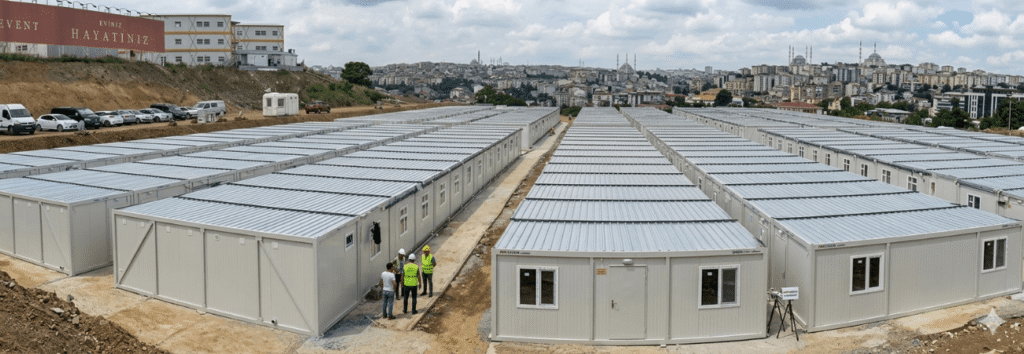
Prefabricated Dormitory Costs
Prefabricated dormitory prices vary depending on the following factors:
- Building size
- Materials used
- Insulation properties
- Interior equipment
These factors have a direct impact on the total cost.
Frequently Asked Questions
How long does it take to install a prefabricated dormitory?
Installation time varies depending on the size of the project and the number of floors, but because prefabrication is completed in the factory, it takes far less time than conventional construction. The speed at which modular components are assembled on site saves time during project mobilization and accelerates operations.
Are prefabricated dormitories durable?
Designed with the right choice of materials and advanced manufacturing techniques, these buildings offer safe, long-term use in all climate conditions. A corrosion-resistant steel frame, with structural calculations made in accordance with earthquake and wind load regulations, keeps personnel safety at the highest level.
Can prefabricated dormitories be relocated?
Yes. Thanks to their modular structure and demountable design, they can be dismantled after the project is completed and reinstalled at a different work site. This portability allows the buildings to be reused again and again on new projects in different locations, minimizing investment costs.