On large construction, energy, industrial, infrastructure and mining projects, a well-planned construction site camp is essential for keeping site operations running smoothly. These facilities, which meet personnel’s accommodation, dining, work, hygiene and social needs, should be custom-designed according to the size of the project and the number of workers.
Prefabricated and modular building systems offer significant advantages in site mobilization projects, as they can be installed quickly, adapted to different needs and reused at other sites when necessary.
What Is a Construction Site Camp?
A construction site camp is an on-site complex made up of buildings brought together to meet the work and daily living needs of project personnel.
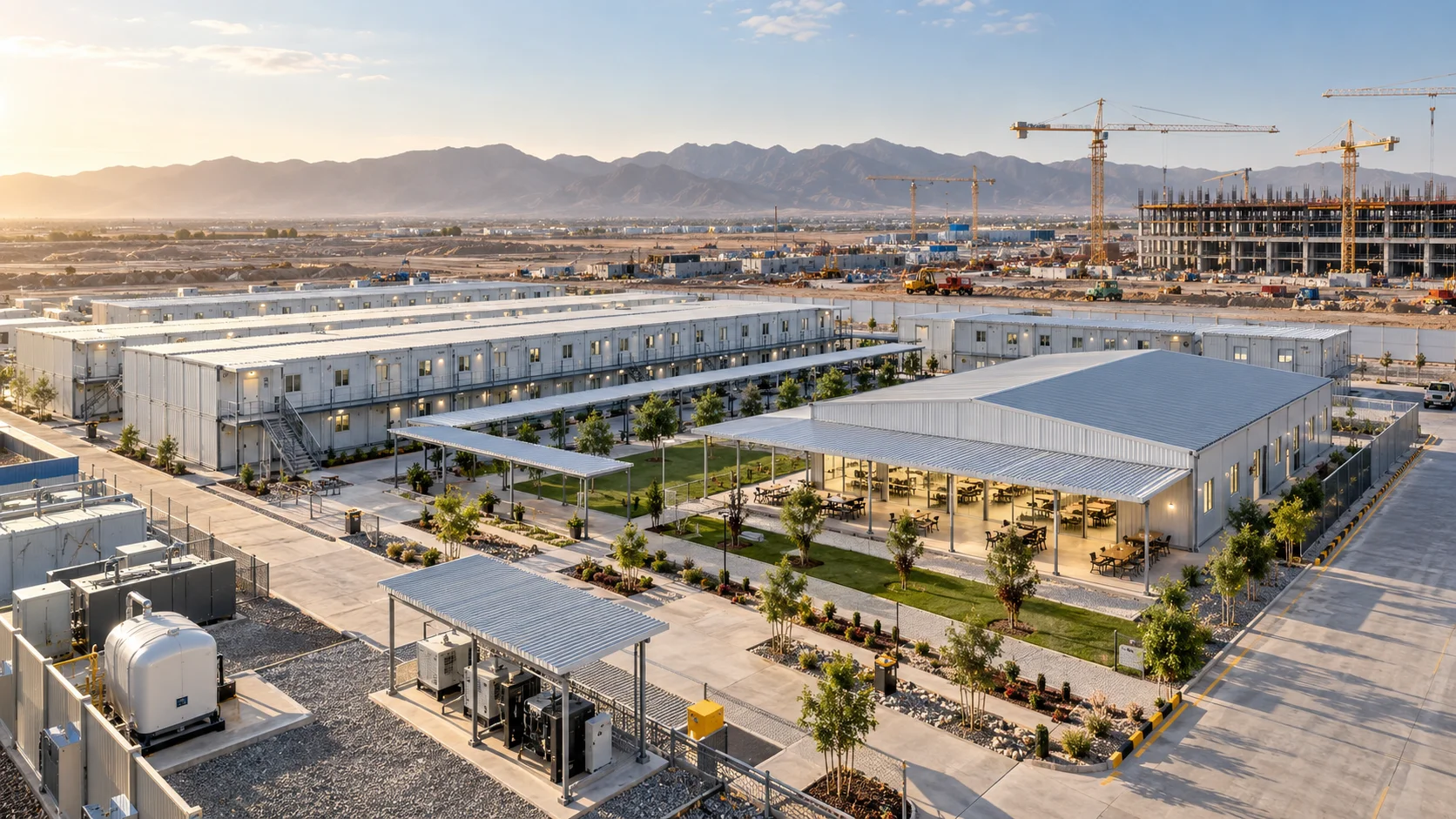
A construction site camp typically includes dormitories, a dining hall and kitchen areas, site offices, WC and shower units, social areas, security buildings, storage facilities and technical units.
Not only the number of these buildings but also their positions on site and the way they connect with one another must be planned correctly.
Calculate Personnel Capacity Accurately
When planning site mobilization, the first step is to determine the total number of personnel who will work on the project. The shift system, working hours and the number of people who will be in the camp at the same time should also be included in this calculation.
For example, on a project employing hundreds of people, it is not just dormitory capacity that matters; how many people the dining hall will serve at once, the number of WCs and showers, and the size of shared areas also become important.
Alyans Prefabrik’s prefabricated construction site building models offer a variety of building options for different personnel capacities and site needs.
Planning Prefabricated Dormitories and Dining Halls
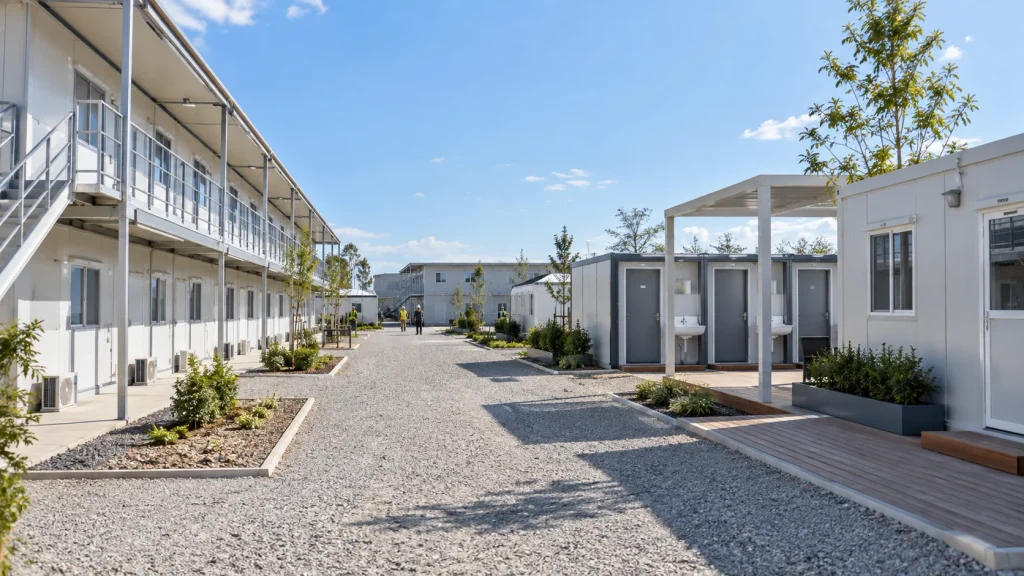
On projects where personnel stay for long periods, dormitory areas must be laid out in a functional and comfortable way. Room capacity, ventilation, thermal insulation, corridors and shared areas should all be considered at the design stage.
For dining halls, capacity should be based on the number of people who will be served at the same time rather than the total number of workers. Planning the kitchen, serving, dining room, dishwashing and storage areas so that they work well together makes daily operations easier.
Site Offices and Container Solutions
Site offices are the hubs from which project managers, engineers and administrative teams manage site operations. Workrooms, meeting areas, archive rooms and management sections can be created as needed.
Site containers and container solutions, thanks to their portable and modular structure, are a popular choice especially for temporary projects or projects carried out in several phases.
The fact that modular buildings can be moved to different sites, reconfigured and expanded with new modules provides flexibility of use. Information published by the Modular Building Institute also highlights the ability of relocatable modular buildings to be reused on different projects and adapted to changing needs as key advantages.
Why Is the Site Layout Plan Important?
In a successful construction site camp, buildings should not be considered in isolation. Access from dormitories to WC and shower areas, from dining halls to personnel areas and from offices to the operations area must be planned correctly.
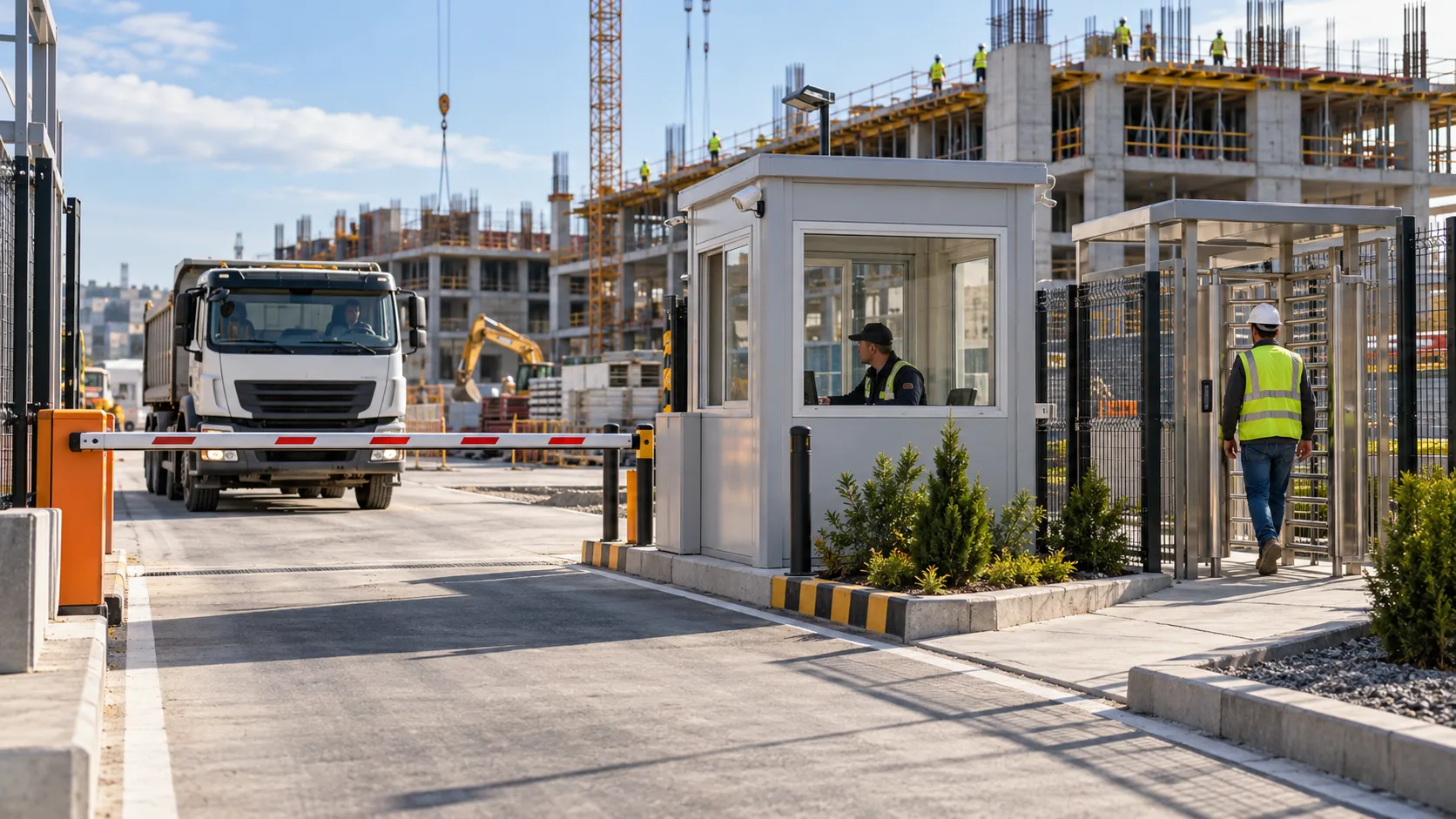
Vehicle and pedestrian traffic, emergency routes, technical infrastructure and site entrances and exits are also important parts of the layout plan.
Project-Specific Site Mobilization Solutions
Every project differs in location, personnel capacity, duration of use and site conditions. That is why designing a construction site camp around the needs of the project, rather than using a standard model, leads to more efficient use.
With prefabricated construction site buildings, dormitories, dining halls, offices, WC and shower buildings and container systems, Alyans Prefabrik offers site mobilization solutions for projects of every scale.
A well-planned construction site camp helps site operations run more smoothly, meets personnel needs and adapts to the different phases of the project.