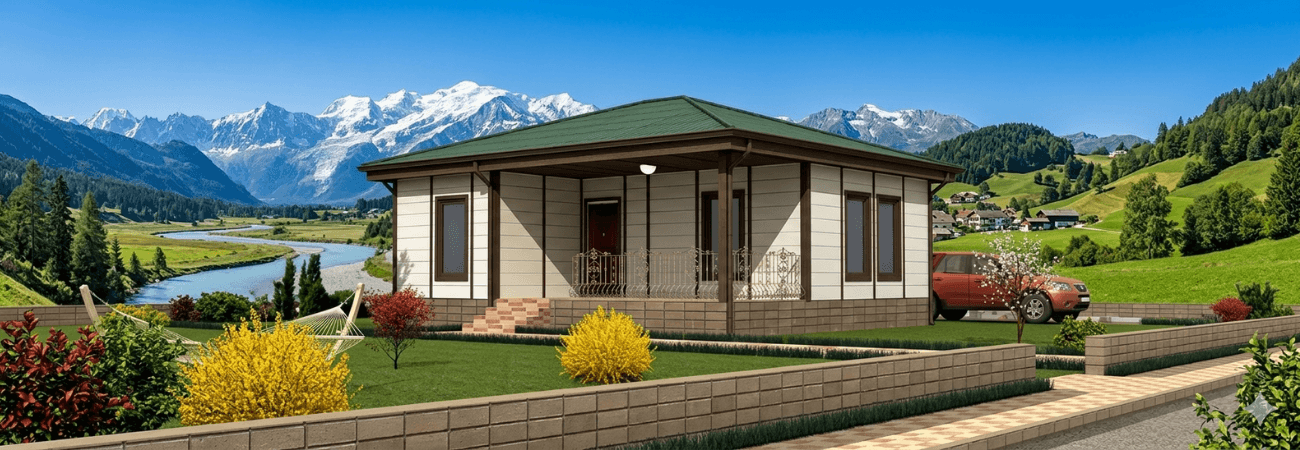
In single-story and two-story prefabricated buildings, the roof system is one of the key components that determine the building’s lifespan and durability. Prefabricated villas meet high standards in terms of roof strength, and the materials used here have a direct impact on structural performance. The roofing solutions preferred for villas are classified according to their watertightness, load-bearing capacity and resistance to environmental factors.
What Are the Features of the Roofing Materials Used in Two-Story Prefabricated Villas?
In general, these factory-built structures can be produced as single-story or two-story buildings, and the same types of roofing materials are used for both. In these prefabricated villa models, however, optional materials tend to be preferred, since these buildings are usually purchased with aesthetics in mind. We have researched the roofing materials used in villas and listed them below.
Painted galvanized sheet metal
Galvanized sheet metal is a roofing material made of steel whose surface is coated with zinc to protect it against corrosion and then finished with a colored paint system. It is the most common type of roofing used on factory-built structures. Some of its features are listed below.
- It is highly corrosion-resistant. The zinc coating prevents the material from rusting.
- It is lightweight. It puts no extra load on the structure and is easy to install.
- It is long-lasting. High-quality painted galvanized sheets can last for many years.
- It offers aesthetic variety, with a range of color options and surface profiles available.
- It is fire-resistant. Because it is metal-based, it does not ignite.
- It is economical. It costs less than other roofing materials.
- It can be dismantled and reinstalled, making it suitable for modular assembly in villas.
Metal roof tiles
Metal roof tiles are produced by pressing galvanized steel sheets into a tile shape with special forming dies and protecting them with a painted or granular coating. This material combines the look of classic roof tiles with modern durability. Some of its features are listed below.
- It has the look of traditional roof tiles and adds architectural value to buildings.
- It offers high resistance to wind, snow and rain loads.
- Thanks to its galvanized steel body, it resists rust and UV exposure.
- It is 6–8 times lighter than real clay tiles.
- Its large panel sizes allow for fast installation.
- Color fading and moss growth over time are minimal.
- It is fire-resistant. Because it is metal-based, it does not catch fire.
Shingles
Shingles are a flexible, bitumen-based roofing material with a fiberglass mat core. Their top surface is usually coated with colored mineral granules. They are used as a roofing material on many different types of buildings. Their features are as follows.
- Waterproof. Thanks to the bitumen layer, rain and snowmelt cannot leak through.
- Provides sound insulation. Rain is much less audible than on metal roofs.
- Contributes to thermal insulation. The bitumen layer slows heat transfer.
- Flame-retardant, with a high fire-resistance rating.
- Damaged pieces can be replaced individually.
The choice of roofing material for two-story or single-story prefabricated villas varies depending on the architectural design, regional climate conditions and budget. In standard applications, painted galvanized sheet metal is the first choice thanks to its cost advantage and high corrosion resistance. When the goal is to improve structural sound insulation, shingle roofing is common, while metal roof tiles are widely used in projects where visual appeal takes priority. Selected to suit the steel-frame substructure, these materials optimize the building’s total weight while providing long-lasting protection.
Frequently Asked Questions
How does the choice of roofing material affect the structural safety of two-story prefabricated villas?
In two-story buildings, the weight of the roof is critically important in terms of the load placed on the load-bearing steel frame. Materials such as painted galvanized sheet metal and metal roof tiles, which we prefer in Alyans Prefabrik projects, are 6 to 8 times lighter than traditional clay tiles. This lightness optimizes the building’s total weight and improves earthquake safety, while the steel body provides maximum resistance to wind and snow loads.
Which roofing system is better in terms of rain noise and thermal insulation?
If comfort is your priority, we recommend a shingle roofing system, which is bitumen-based and flexible. Thanks to its mineral-granule surface, shingle roofing dampens rain noise better than metal roofs and provides extra insulation by slowing heat transfer. That said, even if you choose metal roof tiles or galvanized sheet metal, the high-density rock wool layer we install under the roof maximizes both sound and thermal insulation to Alyans Prefabrik standards.