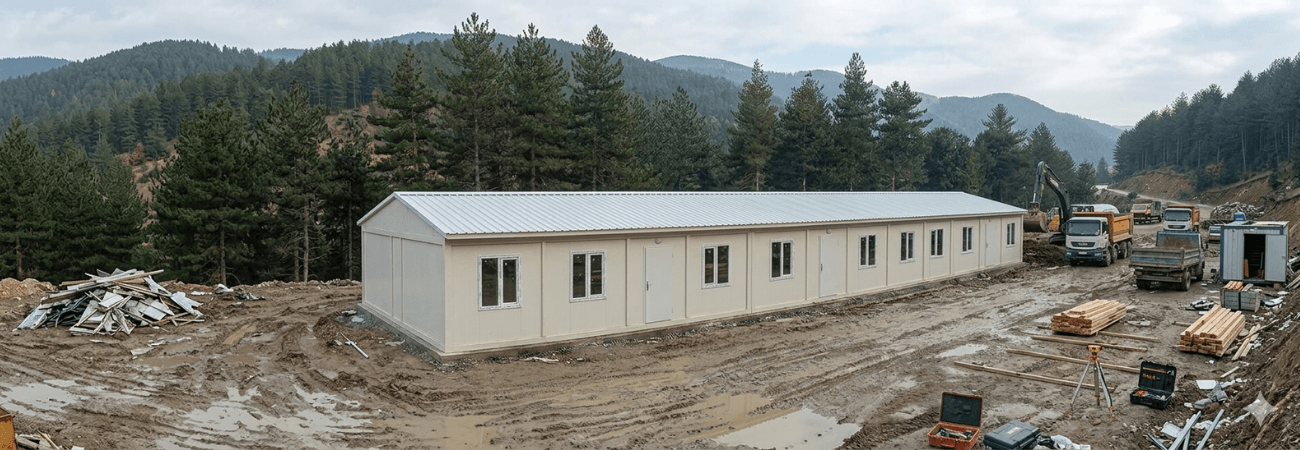
In the construction industry, keeping time and costs under control is critical to a project’s success. While conventional construction methods usually involve long timelines and high costs, prefabricated construction site buildings offer an ideal way to solve these problems. Thanks to their quick assembly, economical design and durability, prefabricated site buildings help projects move forward more efficiently and sustainably.
1) Quick and Easy Assembly
Construction site buildings are prefabricated in the factory, transported to the construction site and assembled quickly. This saves a significant amount of time compared to conventional construction methods. Because the structures are formed by assembling ready-made components, the construction process moves faster. In addition, weather conditions have minimal impact on the assembly process, so work is disrupted less and no time is lost.
2) Cost Savings
These structures are generally more economical than conventional construction. Because they are mass-produced in the factory, material costs are lower. The quick assembly of the structures and controlled manufacturing also reduce labor costs. Saving time generally lowers the total cost of the project and makes it more financially sustainable.
3) Long Service Life and Recyclability
These structures are generally made from durable materials and have a long service life. This means less of a financial burden for future repairs and reconfigurations. In addition, prefabricated structures can be made from recyclable materials, and those materials are easy to recycle even at the end of their service life. This is also an important advantage in terms of environmental sustainability.
4) Flexibility and Portability
Because these structures have a modular design, they can easily be expanded or downsized as needed. This provides greater flexibility when changes are required at later stages of the project. And because they are portable, they can be dismantled and reassembled for use on different projects, which saves costs in the long run.
What Are Prefabricated Site Buildings Used For?
The construction industry is a field that changes and evolves rapidly. While conventional construction methods require a long time and high costs, prefabricated site buildings offer fast, economical and flexible solutions. Thanks to their quick assembly and portability, these structures can be used for many different purposes, making them an ideal choice for employers and clients alike.
1) Construction Projects
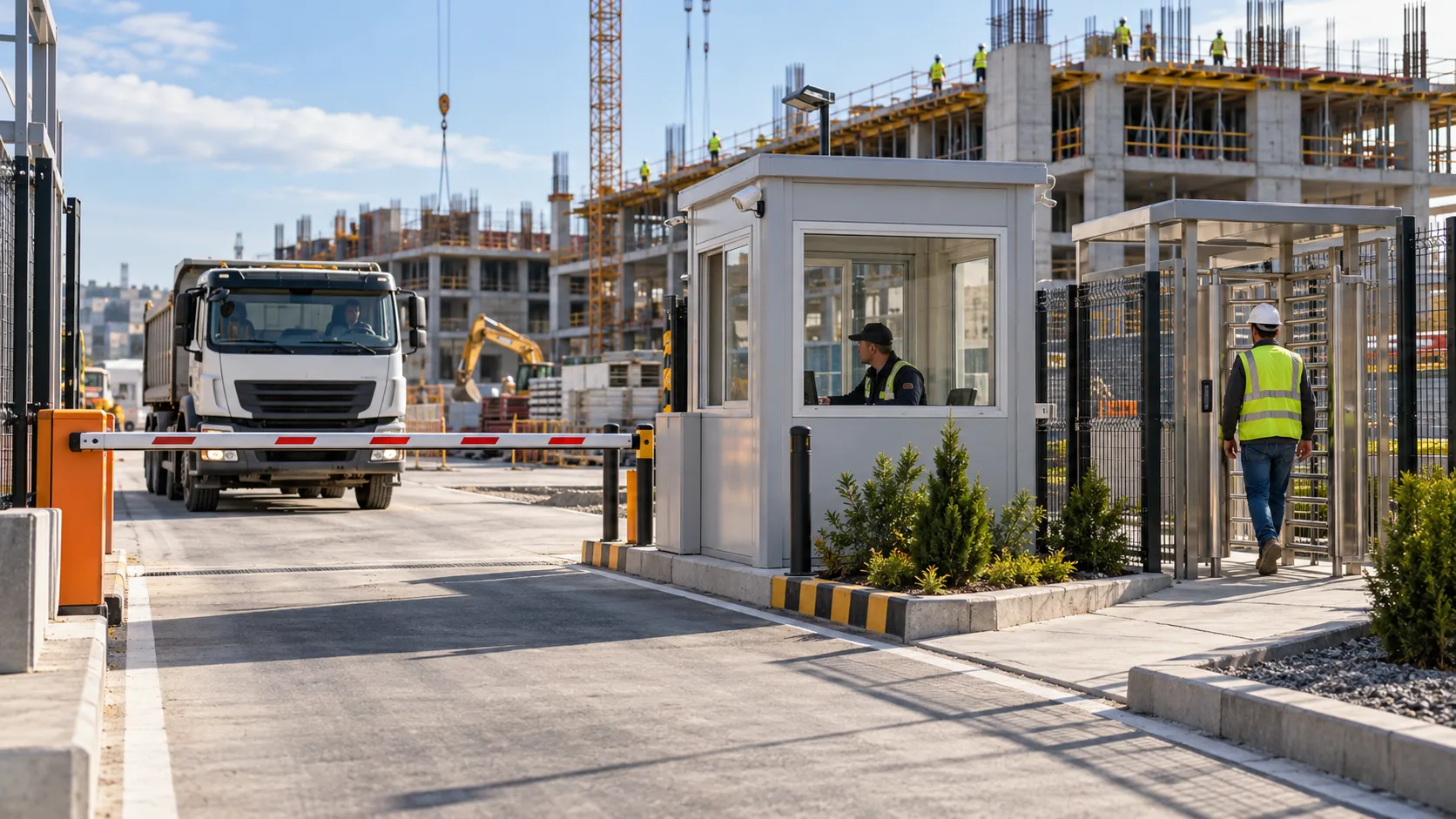
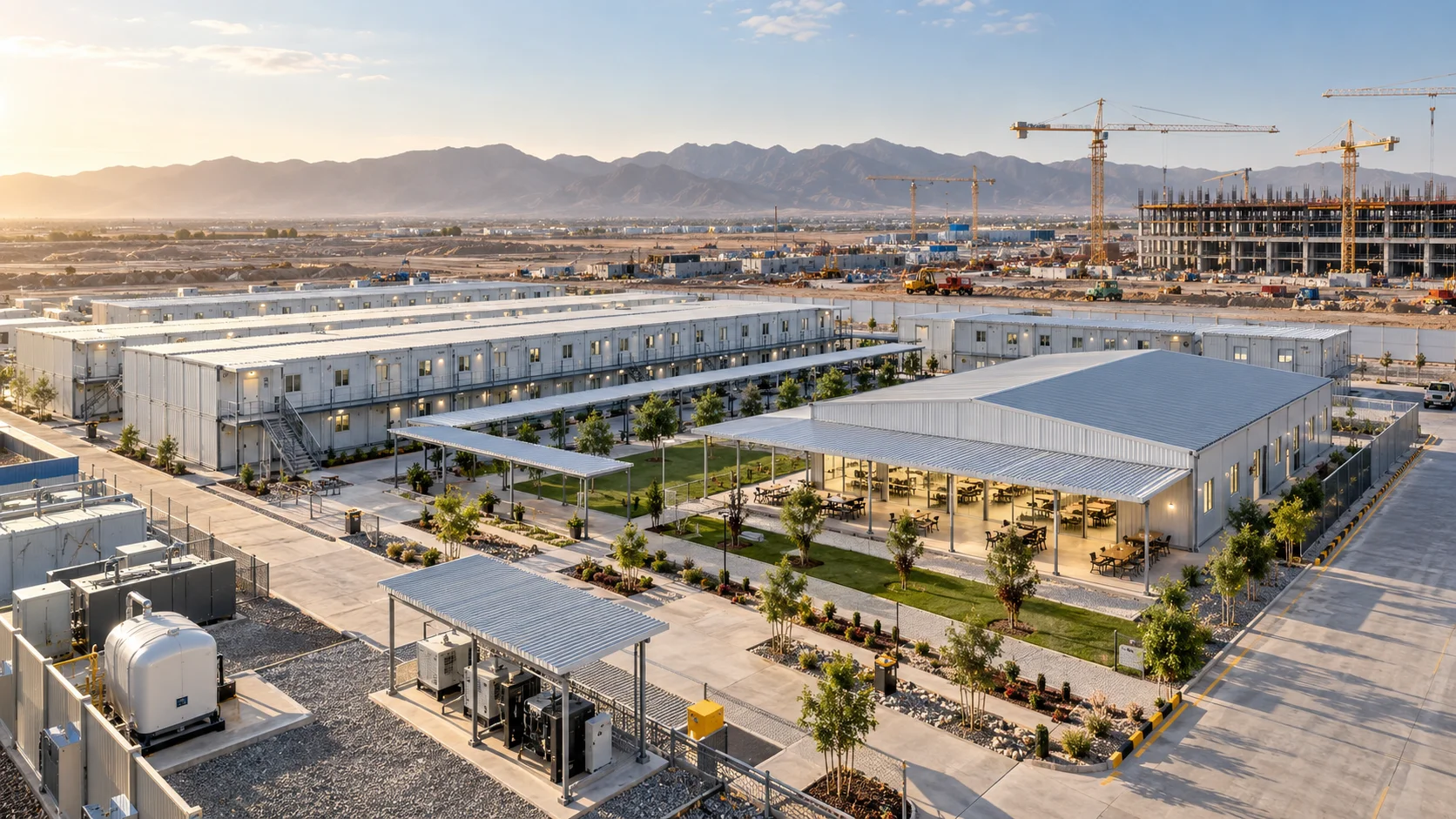
Construction projects are one of the most common uses for site buildings. These buildings are chosen to meet the accommodation needs of the crews working on the construction site. They can serve a range of functions, such as offices, dining halls, rest areas, toilets and showers. They can be assembled quickly and, once the project is completed, easily dismantled and used on another project.
2) Event and Trade Fair Venues
Site buildings are also used as temporary event and trade fair venues. When infrastructure needs to be set up quickly for a fair or event, these structures are the preferred choice. Exhibition halls, booths, trade rooms, seminar halls and other event spaces can be created for this purpose. Once the event is over, these structures can easily be dismantled and used for another event.
3) Educational Institutions
Site buildings are an ideal option for temporary or seasonal educational institutions. These structures offer a quick solution in situations such as rising student numbers or temporary educational needs. In addition, office container models can also be used as administrative offices. While constructing a new school building can be a lengthy process, these structures can be assembled much more quickly. Classrooms, laboratories, libraries and other teaching spaces for temporary educational institutions can easily be set up in site buildings. When the need ends or a new school building is completed, such structures can easily be removed and used on another project.
4) Healthcare Services
The healthcare sector relies on site buildings for emergencies and mobile healthcare services. Emergency medical centers, temporary hospitals, clinics and other healthcare facilities can be set up quickly with these structures. They are designed for rapid assembly and enable a fast response to urgent healthcare needs. Site buildings can also be used to bring healthcare services to remote areas or to set up mobile health camps.
Frequently Asked Questions
How well do prefabricated site buildings withstand harsh weather conditions (extreme wind or snow loads)?
Prefabricated structures are designed with structural calculations that take into account the climate data of the region where they will be installed (snow load, wind speed and earthquake risk). Thanks to their steel construction, these buildings offer resistance similar to that of conventional buildings, while the insulated sandwich panels provide a comfortable indoor working environment in every season.
How are the modular components recycled once a site building reaches the end of its service life?
Because these structures are made from recyclable materials, they offer a major advantage in terms of sustainability. When the building reaches the end of its economic life or projects are completed, the steel frame and panel components can be dismantled and recovered at scrap value, or reassembled and used at an entirely different location.
Is it possible to expand an existing site building if the number of personnel increases?
Yes. One of the biggest advantages of prefabricated site buildings is their flexible, modular design. When needed, dormitory, office or dining hall areas can easily be expanded by adding new modules to the existing structure. This modular design offers fast, low-cost solutions to the changing capacity demands that arise at different stages of a project.