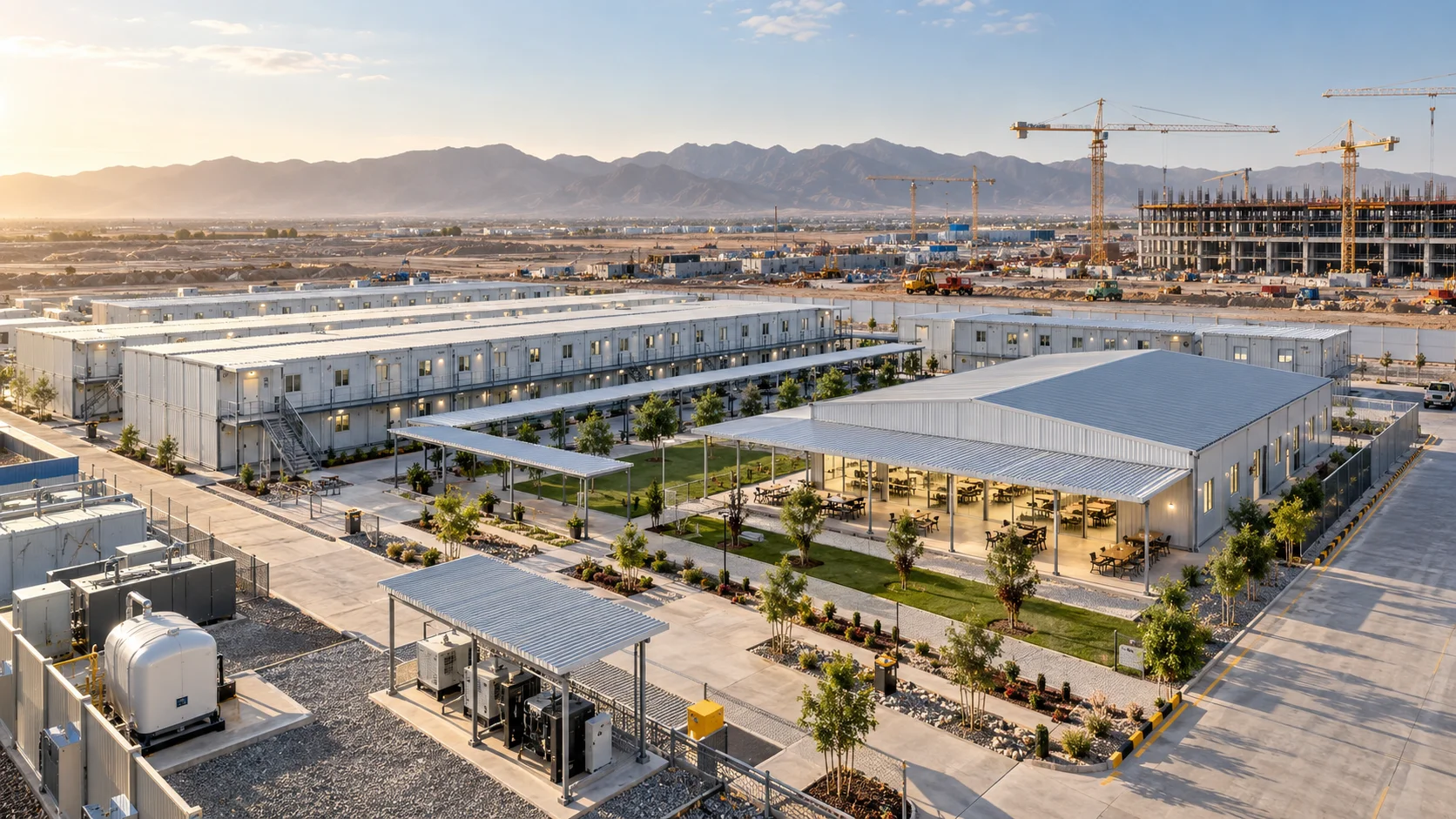
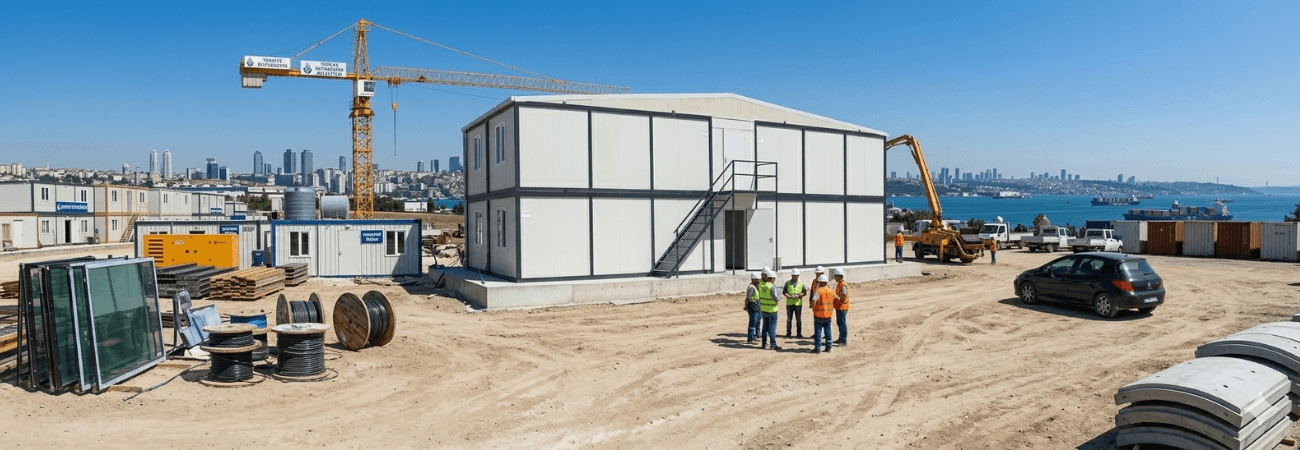
In recent years, prefabricated buildings have been widely used to meet temporary or permanent accommodation needs in many different settings. Among these buildings, dormitory container models offer ideal solutions for construction sites, disaster areas and remote work sites.
Fast Installation and Portability
Dormitory containers are prefabricated in factories and quickly transported to wherever they are needed. This makes it possible to create ready-to-use accommodation in a fraction of the time conventional buildings take. And thanks to their portable design, they can easily be moved to a new location when a project relocates.
Safety and Comfort
Dormitory containers are designed with residents’ safety as a priority. Lockable cabinets, reinforced doors and lockable windows create a secure environment, so workers and other occupants can keep their belongings and personal space safe.
Personal Space and Layout
Dormitories can be arranged to provide personal space even in high-occupancy settings. Partitioned sleeping areas, acoustically insulated dividers and ergonomic layouts create a comfortable living space. Typically, each section accommodates an average of 4 workers.
How Durable Are Dormitory Containers?
Dormitory containers are made from durable materials such as steel, which gives them resistance to harsh weather. Their structure stands up to wind, rain and snow, keeping residents safe.
Insulation and Protection
All models are equipped with thermal, sound and water insulation as standard. Special anti-corrosion coatings and protection at the joints make them long-lasting and moisture-proof.
Comfortable Interiors
Dormitories maintain comfortable indoor temperatures in extremely hot or cold climates. Electrical wiring, lighting and the necessary fixtures are added during installation, and heating, air conditioning and ventilation systems create a comfortable, healthy environment. Window vents can be opened when needed to maintain indoor air quality.
Are Dormitory Containers Eco-Friendly?
Eco-friendly solutions are becoming a priority today, and dormitory containers offer energy efficiency and sustainable design. High-quality insulated walls, windows and doors maintain indoor temperatures and reduce the need for constant heating or cooling.
Green Energy and Savings
For sustainable operations, dormitories can be fitted with solar panels as well. Energy-saving appliances and LED lighting lower operating costs. In addition, WC and shower containers can meet workers’ hygiene needs in an eco-friendly way.
Easy Cleaning and Modular Design
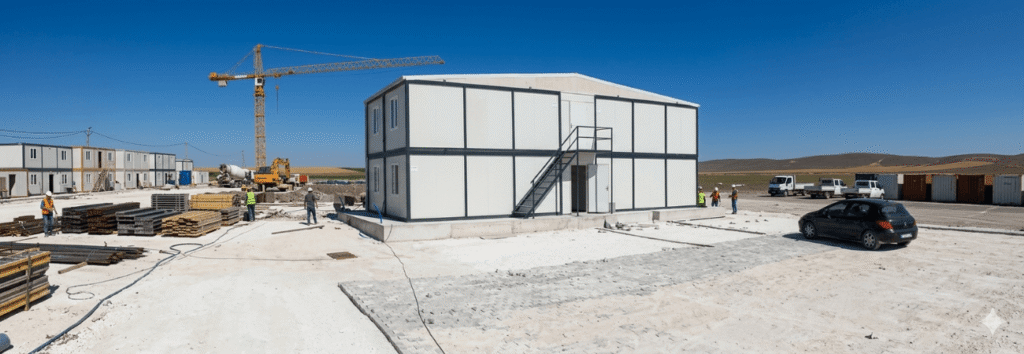
Dormitories are made from materials that withstand heavy use and are easy to clean. Thanks to their modular structure, they can be easily expanded or reconfigured. Several units can be combined to create large living spaces or multi-story accommodation blocks.
Economical and Long-Lasting
Because factory-built dormitories arrive ready-made, they are quick to install and do not require heavy maintenance. This reduces long-term costs and gives companies comfortable, budget-friendly accommodation. They also offer a predictable cost structure with no unplanned expenses.
Frequently Asked Questions
How are climate control and energy efficiency achieved in dormitory container units?
Modular dormitory units offer superior thermal insulation values thanks to high-density rock wool or sandwich panel wall systems. This structural feature maintains indoor temperatures with minimal energy consumption while allowing heating, cooling and ventilation (HVAC) systems to run efficiently.
What level of sound insulation and acoustic design do construction site dormitories offer?
In areas with high noise levels such as construction sites, materials with acoustic damping properties are used in the wall panels to improve workers’ quality of rest. Sealing details at panel joints and quality window systems significantly reduce the amount of outside noise that reaches the interior.
Is the structural design of dormitory containers suitable for multi-story use?
Because container models are built on high-strength steel frame systems, they can be stacked on top of one another to create multi-story living spaces. With structural calculations that take wind and seismic loads into account, and with the addition of stairs and walkways, these buildings offer maximum accommodation capacity in tight spaces.