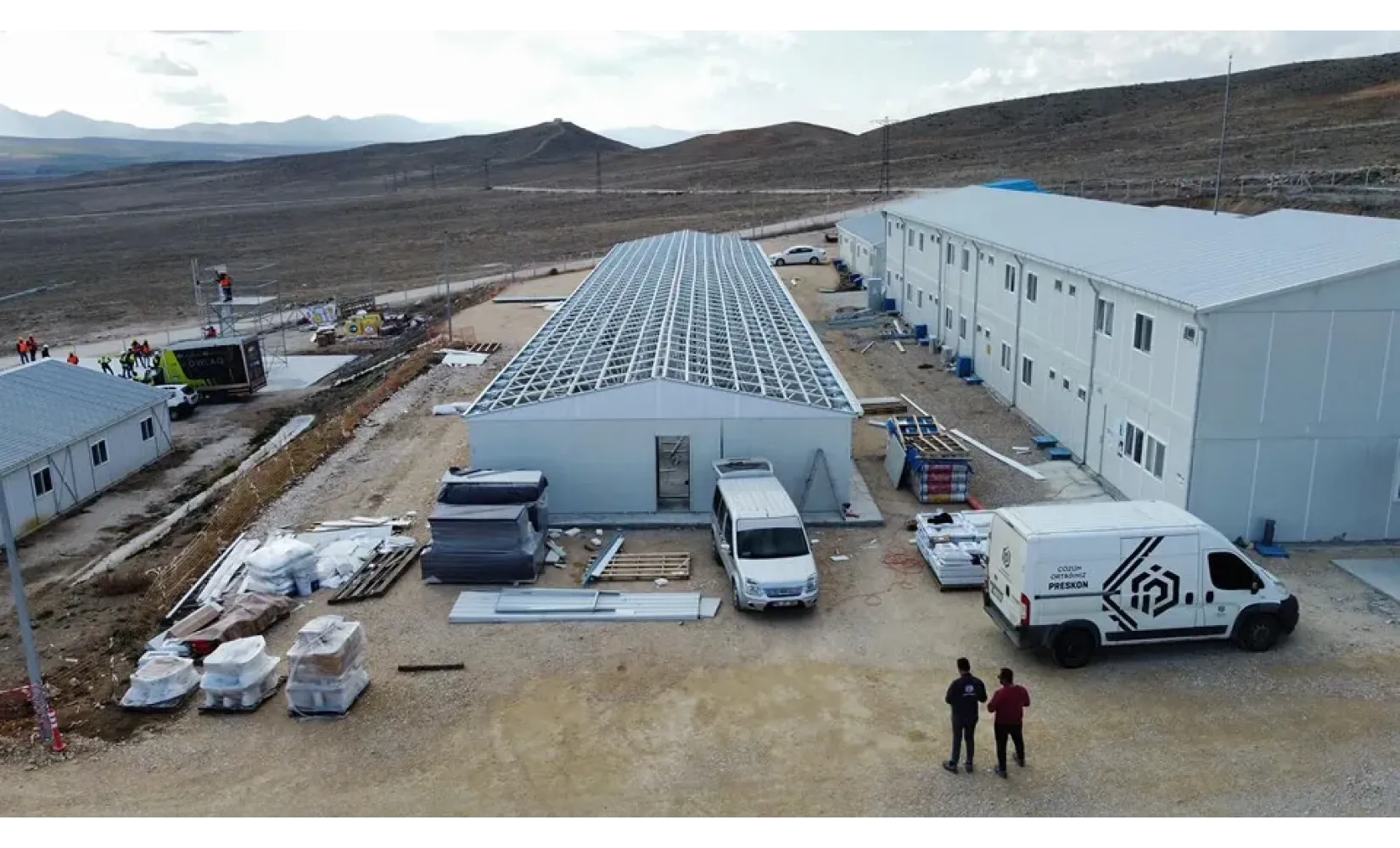
Prefabricated buildings are modular building systems prepared in factories using industrial production techniques and installed quickly on site. Standards-compliant production processes make it possible to use these buildings safely in a wide range of applications.
Fast installation, cost control and flexible design options are among the main reasons prefabricated buildings have come to the fore in recent years. Thanks to their modular structure, different units can be combined into a single system, allowing dormitories, dining halls, offices and other functional areas to be planned as an integrated whole.
Which Prefabricated Buildings Are Used Together?
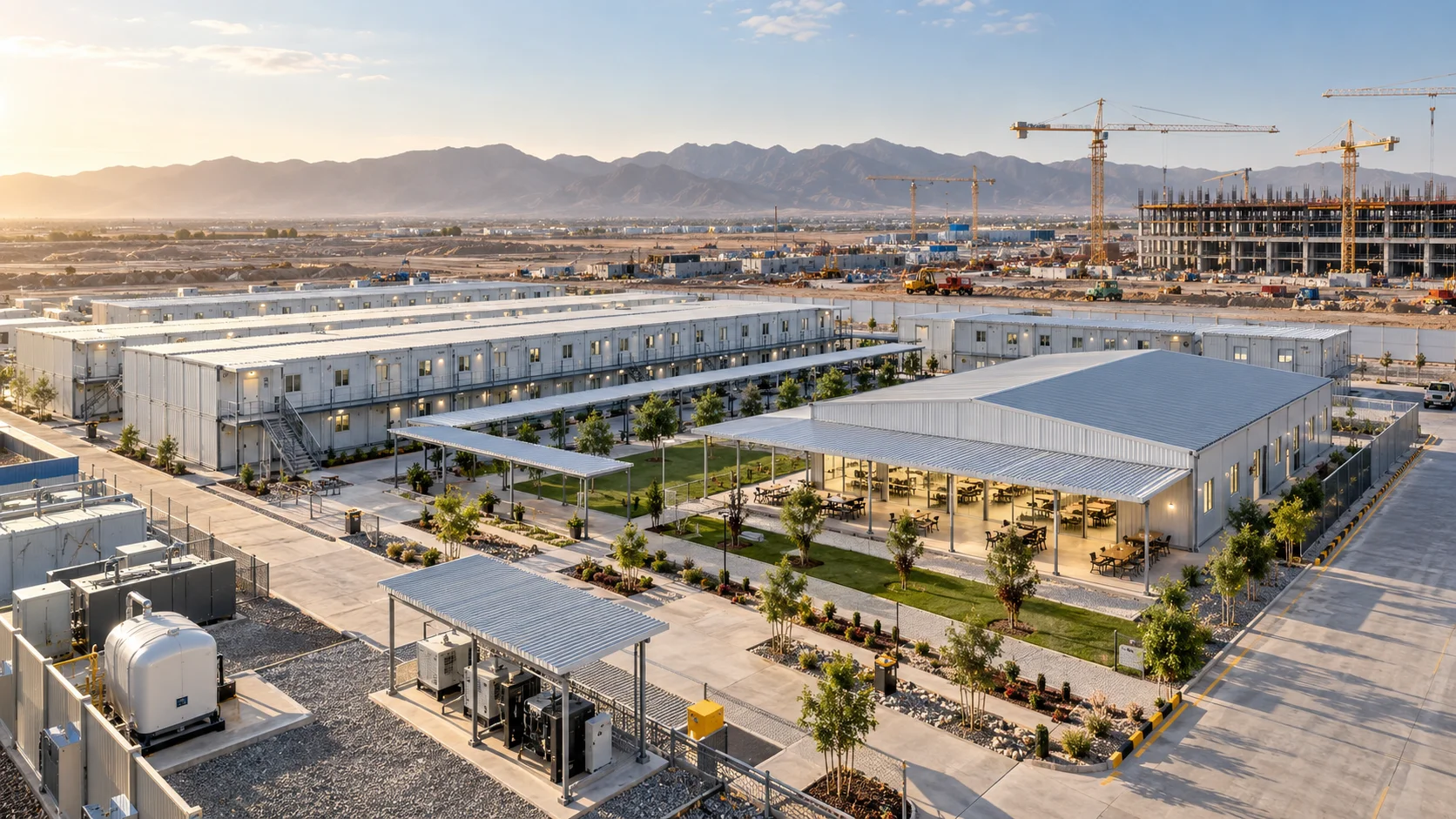
Looking around us, we can see buildings of many different types and sizes in use. Although it may not be obvious from the outside, some buildings can be combined and become even more practical when joined together. Prefabricated dormitories and dining halls are an ideal example of this. A worker who wakes up in the morning can walk straight to the dining hall, and moving between all areas is seamless.
Kiosks and Storage Units
Prefabricated building technology makes it possible to produce kiosks and storage units. Functional on their own, these structures become far more practical when combined. For example, products sold at the kiosk can be transferred directly to the storage area.
Offices and Toilets
Although offices are usually used on their own, an additional toilet area can be added, making them more functional and user-friendly. Insulated and durable offices also provide comfort in different climates and under heavy use.
Dormitories and Showers/Toilets
Combining dormitories with shower and toilet areas offers great convenience for occupants. For example, a worker who has just taken a shower can return to the dormitory without going outside, saving both time and energy.
Guard Cabins and Toilets
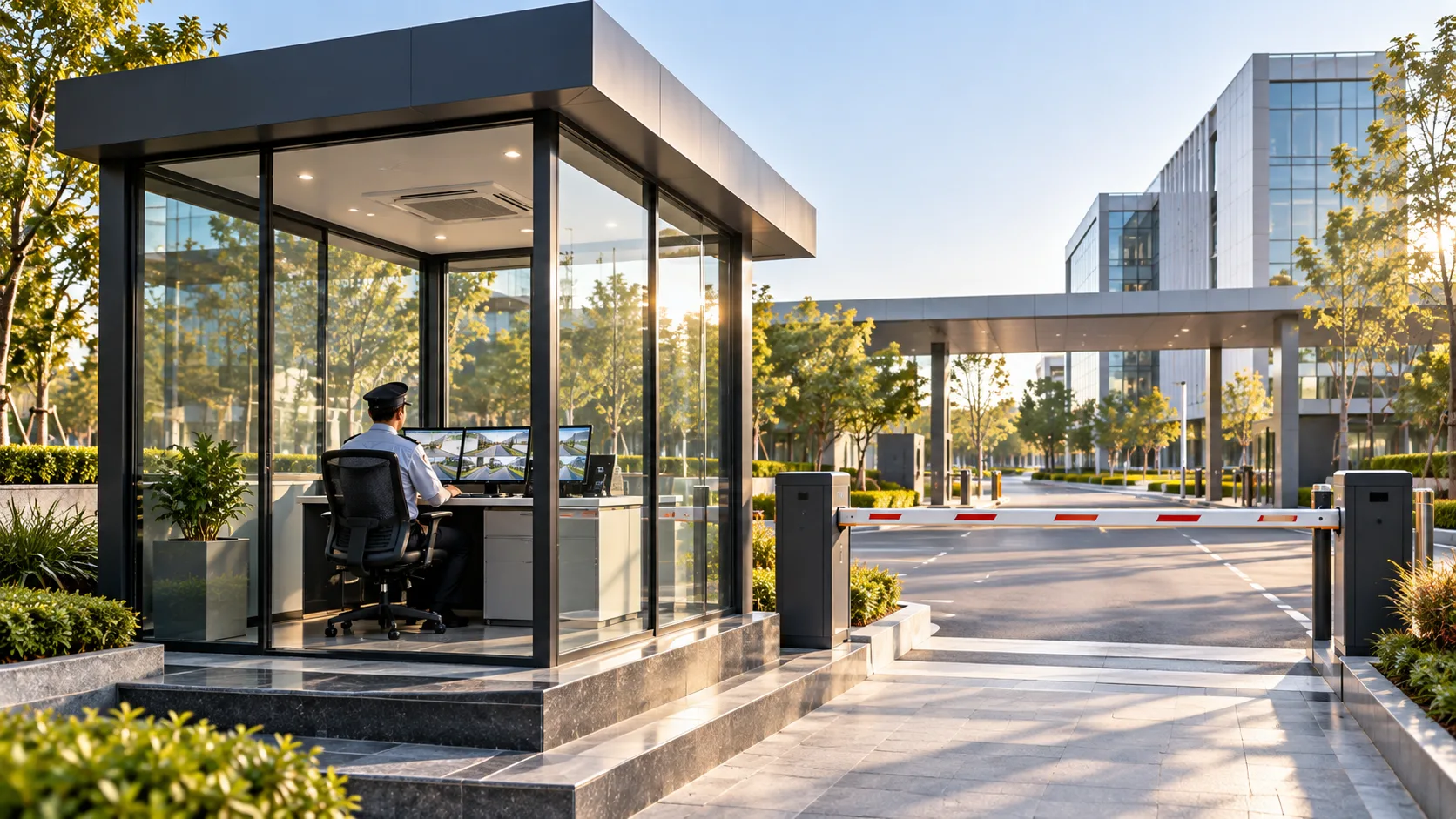
Used for security purposes, these structures are durable and insulated. Adding toilet areas to guard cabins built with sandwich panels increases the comfort of on-duty personnel.
Which Prefabricated Buildings Are Used Where?
These factory-built structures are used in many different parts of Türkiye. Being practical, affordable and long-lasting, they are widely used across various sectors. In addition, their interior design can be modified and adapted for more than one purpose.
Construction Sites
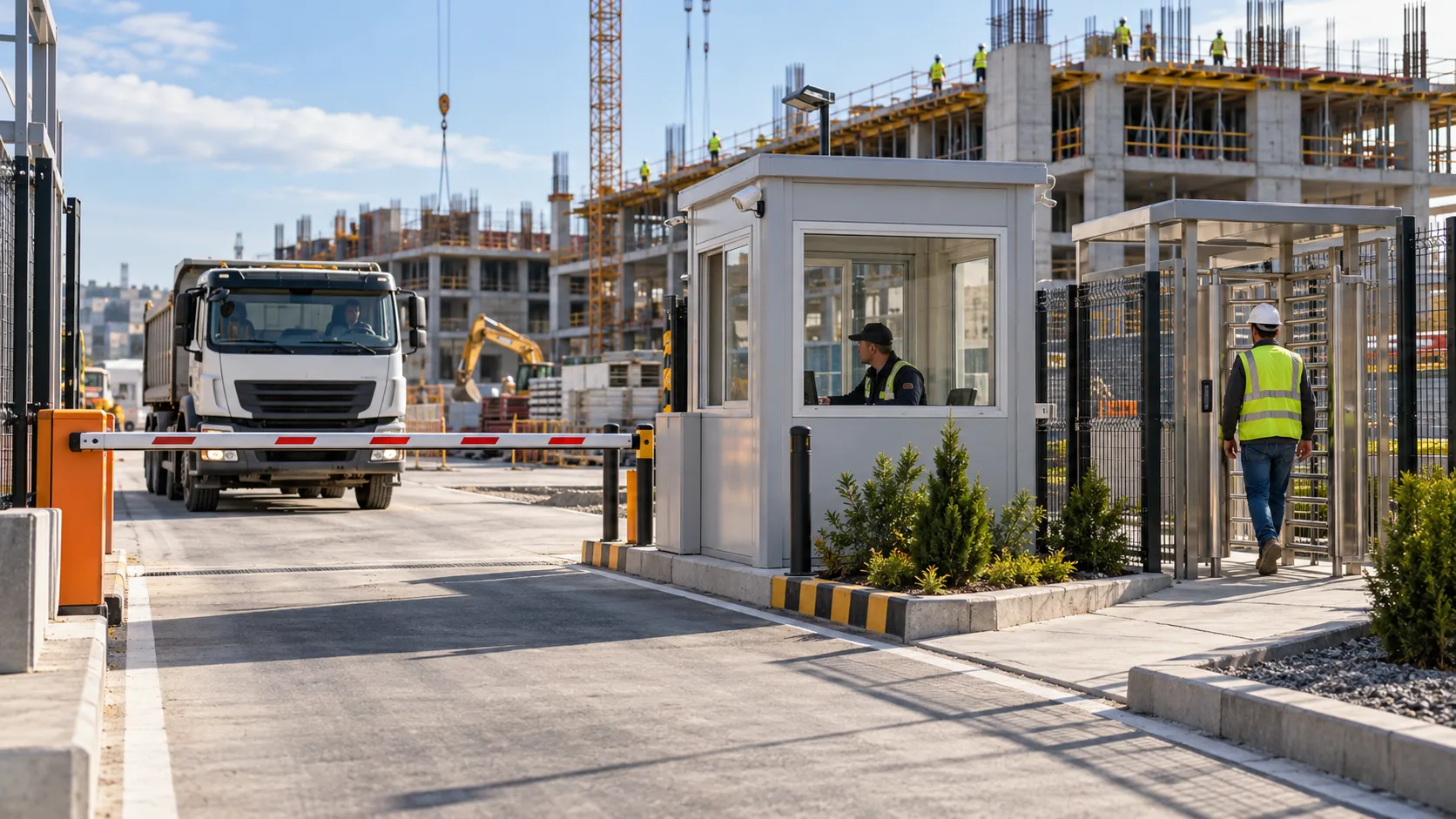
Construction sites need complex facilities. Dormitories, dining halls, offices, showers and toilets can all be combined under one roof. Because they are affordable, these buildings offer an ideal solution for construction sites.
Mining Sites
At mining sites located outside cities, various prefabricated buildings are used for security and staff comfort. These buildings meet the basic needs of miners, such as accommodation and meals.
Military Areas
Military barracks and outposts require large, complex facilities. Dormitories can be produced as staff housing for officers and as barracks-style dormitories for enlisted soldiers. Dining halls and offices are also widely used in these areas.
Public Areas
Offices are used by entrepreneurs to set up new businesses or by real estate companies as sales offices. Prefabricated buildings are also highly functional at locations such as parcel collection points and shuttle bus pick-up areas.
Insulation and Durability in Prefabricated Buildings
These buildings are designed for year-round use. Prefabricated dining halls and prefabricated dormitories built with sandwich panels provide thermal insulation, soundproofing and waterproofing. Durable and long-lasting thanks to their panel structure, they also offer the advantage of fast production and installation. By choosing one of these insulated, durable and functional buildings, you can make the most efficient use of your space.
Frequently Asked Questions
Does combining a prefabricated dining hall and dormitory affect the building’s insulation?
No. In the combined modular systems we offer at Alyans Prefabrik, insulation integrity is maintained. Since the units are integrated with each other during production, the sandwich panel walls and insulated roof system continue without interruption, so there is no heat or sound loss at the joints.
Can additional units be added to an existing prefabricated building later?
Yes. The greatest advantage of prefabricated buildings is their modularity. As your needs grow, additional units such as toilets, showers or storage rooms can be technically integrated into your existing office or dormitory building, backed by the Alyans Prefabrik guarantee.
Besides construction sites, where do combined prefabricated buildings offer advantages?
Integrated buildings offer advantages not only at construction sites but at any location with a large workforce, such as mining sites, military camps and even cargo collection centers. Bringing dining halls, dormitories and social areas together in a single complex reduces staff transit time and increases operational efficiency.