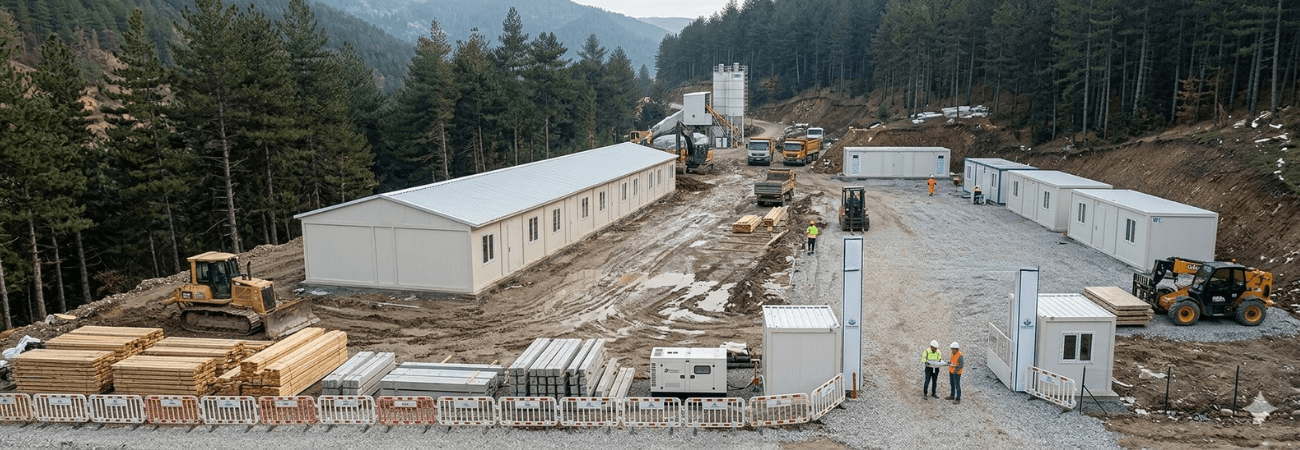
Today, eco-friendly technologies and sustainable construction methods are becoming more and more important. This is where eco-friendly prefabricated construction site buildings come in as an ideal option, offering sustainability and recycling solutions.
Less Energy and Waste
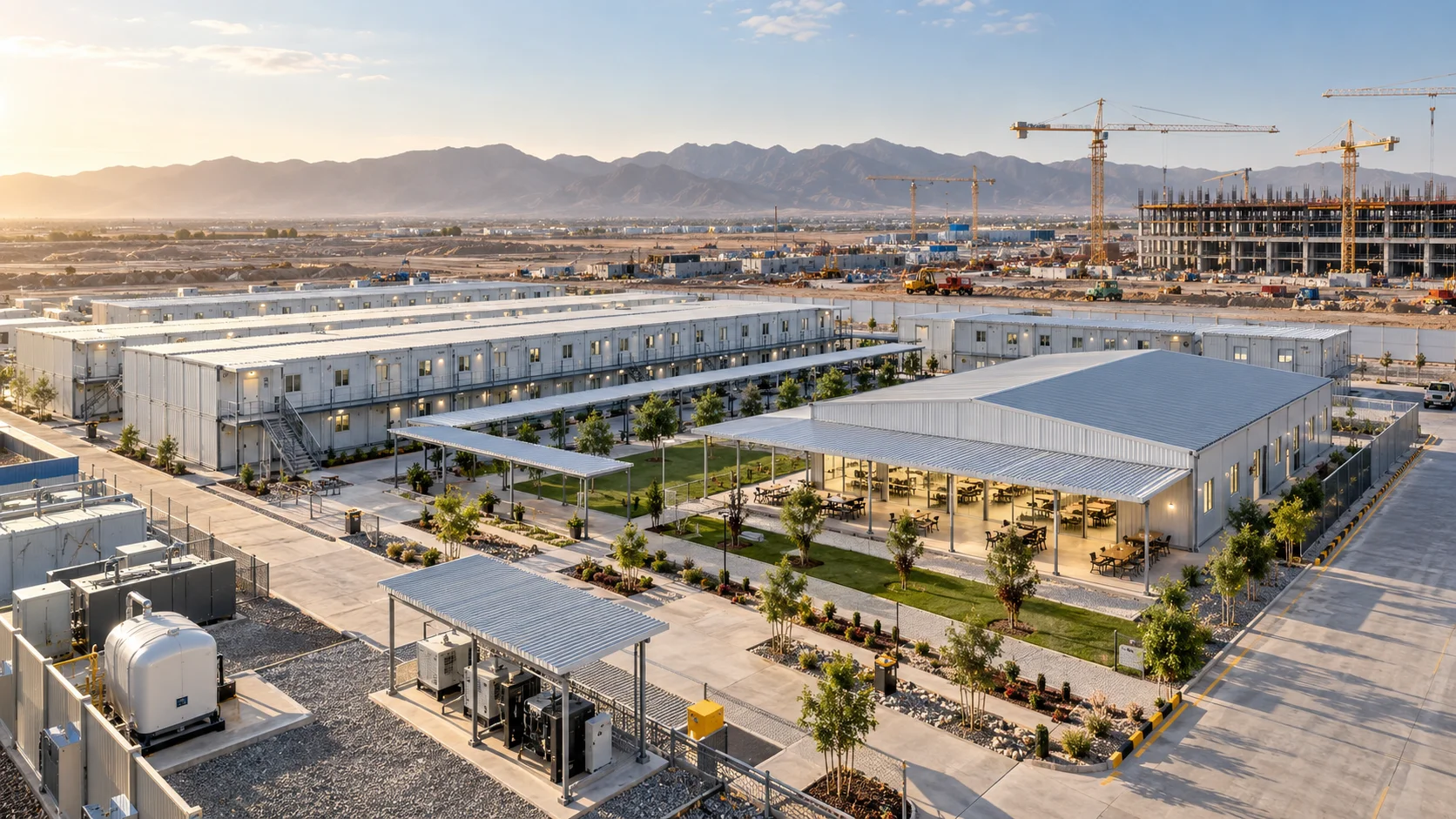
Prefabricated site buildings consume less energy and generate less construction waste than conventional building methods. Manufactured with low carbon emissions, these structures are transported to the construction site and assembled quickly. This speeds up the construction process while keeping environmental damage to a minimum.
Energy Efficiency
Equipped with high-quality insulation materials, eco-friendly prefabricated buildings save energy. This lowers energy costs both during construction and throughout the building’s use, and helps reduce harm to the environment.
Use of Sustainable Materials
Most of the materials used in prefabricated site buildings are recyclable or come from renewable sources. What’s more, these materials can easily be reused when the structures are dismantled. As a result, natural resources are used more efficiently and environmental impacts are reduced.
The Recycling Advantage
Because these buildings are made from easily recyclable materials, post-construction waste can be managed more effectively. Eco-friendly prefabricated structures not only ensure a sustainable construction process but also help protect the environment in the long term.
What Materials Are Used to Insulate Prefabricated Site Buildings?
As a fast and economical construction solution, prefabricated site buildings are mostly built on load-bearing steel structures. However, using the right insulation materials is critical for energy efficiency and indoor comfort.
Wall Insulation
For walls, polyurethane foam or extruded polystyrene (XPS) is generally preferred. These materials are lightweight, durable and resistant to large temperature fluctuations. They are also easy to apply and shape, which makes them ideal for insulating walls.
Ceiling Insulation
For ceilings, rock wool is frequently used. Rock wool is a fire-resistant, water-resistant material that also provides sound insulation. As an eco-friendly option, it is also a popular choice in modern site buildings.
Floor Insulation
For floors, glass wool or mineral wool is commonly used. These materials withstand temperature changes at the floor surface and also provide sound insulation. They stand out for being easy to apply and eco-friendly.
The Importance of Insulation
Choosing the right insulation material increases energy savings and comfort in site buildings. A well-insulated structure reduces indoor heat loss, lowers energy bills and keeps noise levels under control. In addition, by choosing different materials for the ceiling, walls and floors based on their properties, you can maximize the building’s performance.
For the prefabricated site buildings that suit you best, click here now.
Frequently Asked Questions
What is the service life of construction site buildings?
Manufactured by Alyans Prefabrik to high engineering standards, our site buildings offer a service life of up to 50 years thanks to their high-quality galvanized steel frame and corrosion-resistant components. Regular maintenance and installation based on accurate structural calculations ensure that the structures perform efficiently throughout this period.
How are sound and heat insulation achieved in prefabricated site structures?
In our site structures, sound and heat insulation are maximized with high-density polystyrene foam or rock wool cores in the wall panels and glass wool insulation in the roof system. These insulation layers minimize outdoor noise while retaining indoor heat, resulting in significant savings on energy costs.
Can Alyans Prefabrik structures be relocated?
Yes. Because Alyans Prefabrik site solutions are designed to be fully modular and demountable, they can be dismantled and moved to a different location once your project is complete. Since the panels and steel components can be dismantled without damage, the same structure can be safely installed and used again and again across different site operations.