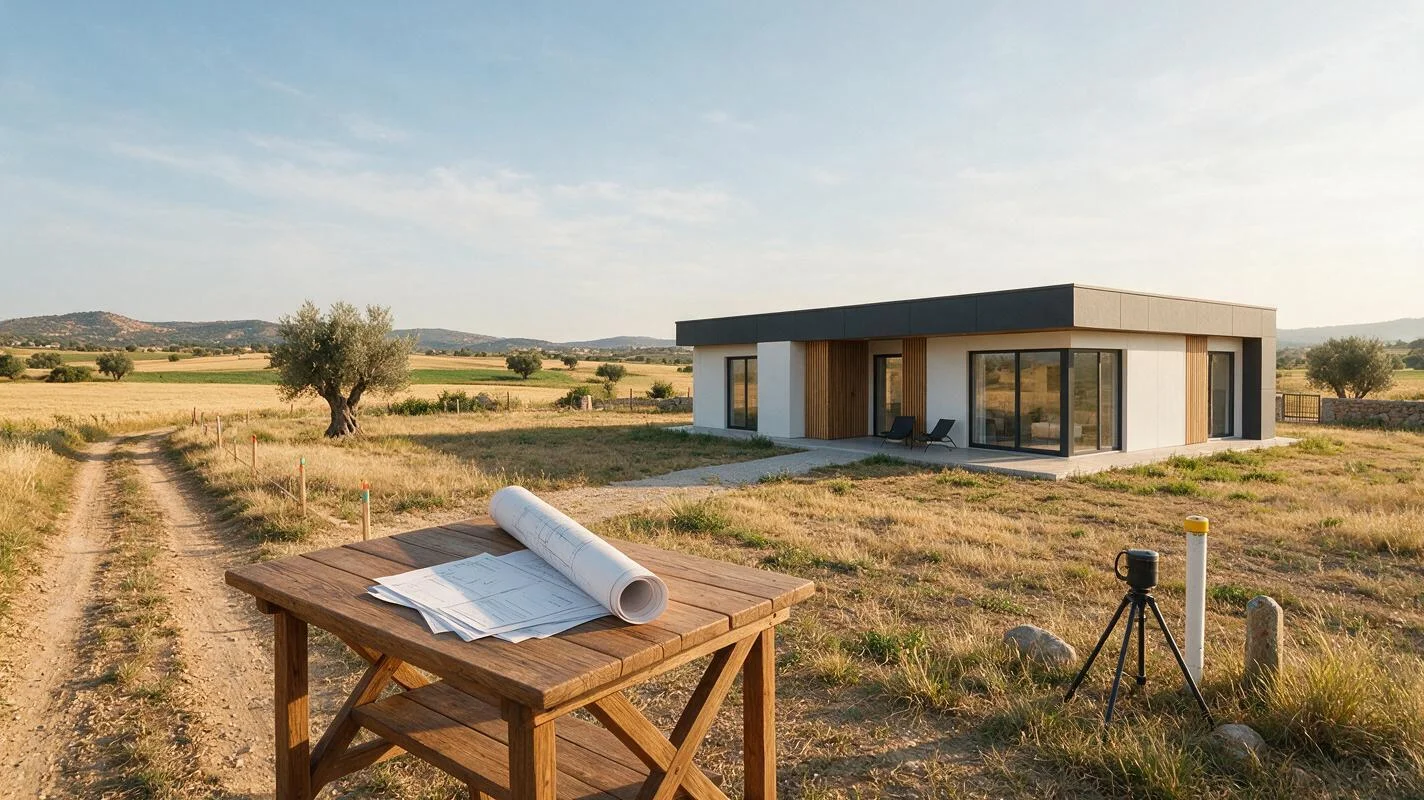
Owning a plot of land does not automatically mean you can build on it. In particular, the answer to the question can you build a prefabricated house on unzoned land depends on how the property is classified in the title deed, its location, the size of the parcel, its road frontage and the building conditions set by the relevant authority.
Although prefabricated houses are manufactured in a factory and installed quickly, from a legal standpoint they are not treated entirely differently from other residential buildings. The fact that a building is prefabricated does not automatically remove zoning and permit requirements. That is why, before a house is installed on a plot, the current status of the property should be confirmed with the municipality, the provincial special administration or the competent authority.
What Does Unzoned Land Mean?
What does unzoned land mean is one of the first questions anyone planning to build on a plot needs to answer. Properties commonly referred to as “unzoned land” are generally parcels that have no implementation zoning plan or that are not designated for residential development in the plan.
Properties registered in the title deed as a building plot, field, vineyard, orchard or olive grove may be subject to different building conditions. Even if a parcel appears as a “building plot” (arsa) in the title deed, this alone does not prove that it carries the right to build a house. The current zoning status and the opinions of the relevant authorities must also be checked.
An unzoned property may be located in one of the following areas:
- Within a village or rural settlement area
- In the vicinity of a village settlement area
- Within municipal boundaries or the adjacent areas under municipal jurisdiction
- On agricultural land outside a settlement area
- In a forest, pasture, heritage site or protected area
- Within a special environmental protection area or water basin boundary
Since different building conditions may apply in each of these areas, decisions should not be made based on the title deed alone.
Can You Build a Prefabricated House on Unzoned Land?
It may be possible to build a prefabricated house on an unzoned parcel if certain conditions are met and the necessary permits are obtained. However, not every unzoned plot is suitable for residential construction.
Under Article 21 of Zoning Law No. 3194, a building permit must be obtained for buildings within the scope of the law, apart from the specified exceptions. Therefore, the fact that a building’s components are prepared in a factory, or that it is not built on the ground using reinforced concrete, does not automatically mean it can be installed without a permit.
If a prefabricated building
- is used as a dwelling,
- is fixed to the ground,
- has a foundation or infrastructure connections,
- is connected to electricity, water and sewerage,
it is generally assessed within the scope of building legislation. Installing it without a permit on the assumption that it is a “portable structure” can lead to consequences such as fines, sealing of the building or its removal.
What Are the Requirements for Building a Prefabricated House on Unzoned Land?
The requirements for building a prefabricated house on unzoned land are not the same for every parcel. The relevant authority makes its assessment based on the location of the property and the current legislation.
Check the Title Deed Classification
Whether the property is registered in the title deed as a building plot, field, vineyard, orchard, pasture or another type of land directly affects the permit process. On agricultural land in particular, an opinion from the Provincial Directorate of Agriculture and Forestry or a permit for non-agricultural use may be required.
In areas classified as pasture or forest, there may be further restrictions on private ownership and construction.
Find Out the Zoning Status of the Parcel
In areas without a zoning plan, the provisions of the Zoning Regulation for Unplanned Areas may apply. However, the provisions of environmental plans, conservation decisions and regional plans may take precedence.
A zoning status certificate obtained from the competent authority will tell you:
- Whether the parcel is suitable for construction
- The permitted use of the building
- Building setback distances
- Floor and height limits
- The permitted building ratio
- The required opinions from other authorities
Check the Cadastral Road Access
In many building applications, an important condition is that the parcel has frontage on a cadastral road. Not every road shown in the land registry is actually open, and not every road in actual use appears on the cadastral map. For this reason, road access should be verified both in the land registry and cadastre records and with the relevant authority.
Consider the Rules for Agricultural Land
A large proportion of unzoned properties are registered in the title deed as fields. Whether a house can be built on agricultural land depends on the class and size of the land, its agricultural integrity and the decisions of the relevant authorities.
Permitted building ratios and maximum construction areas on agricultural land can vary according to legislation and local planning decisions. Claims frequently found online, such as “You can build a house on a certain percentage of any field,” should therefore not be assumed to apply to every parcel.
Prepare the Building Permit and Project Drawings
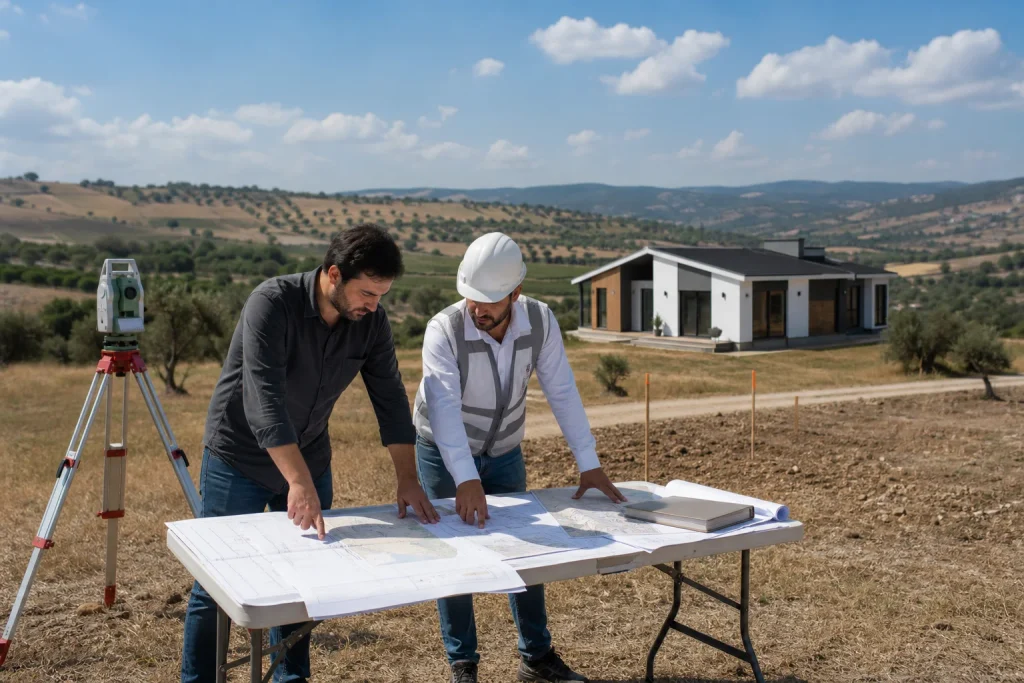
Once the parcel has been confirmed as suitable for construction, architectural, structural, electrical and mechanical designs may need to be prepared for the prefabricated house. A soil survey, a site setting-out plan and infrastructure documents may also be required in the application file.
Starting production or foundation work before the permit process is complete can lead to serious financial losses. The safest approach is to confirm the parcel’s building rights before choosing a prefabricated house model.
Can You Build a Prefabricated House in a Village Settlement Area?
In village and rural settlement areas, different permit procedures may apply to certain buildings. Under Article 27 of Zoning Law No. 3194, a building permit may not be required for certain residential and agricultural buildings. However, this does not mean that no plans or approvals are needed at all.
The building may still need to comply with technical, health, design and local architectural requirements, and approval may need to be obtained from the relevant authority. It should also be checked in official records whether the parcel actually lies within a village settlement area or its vicinity. Being close to a village does not mean that the property is legally within the village settlement area.
How Should Unzoned Land Be Assessed for a Prefabricated House?
When evaluating a plot of unzoned land for a prefabricated house, you should not look only at its size or price. The following sequence can be followed before making a purchase or project decision:
- Examine the title deed record and the classification of the property.
- Obtain the current zoning status from the competent authority.
- Check the boundaries of the village or rural settlement area.
- Verify the cadastral road frontage.
- Research any agricultural, forest, pasture and conservation decisions.
- Identify the required authority opinions and permits.
- Prepare a prefabricated house design that complies with the parcel’s building rights.
- Proceed with installation only after the permit or the approval of the relevant authority has been obtained.
Carrying out this review before buying the land significantly reduces the legal and financial risks that may arise later.
Does Being Prefabricated Remove the Need for a Building Permit?
A prefabricated house is a building system in which the building components are manufactured in a controlled factory environment and assembled on site. The technical answer to the question “What is a prefabricated house?” describes the production method; it does not determine the permit status of the building.
Whether they are made of reinforced concrete, steel, timber or prefabricated elements, permanent residential buildings are assessed under zoning legislation. Not using a foundation, the small size of the house or the fact that it can be installed quickly does not, on its own, provide an exemption from the permit requirement.
Get Official Approval Before Installation
In short, there is no single “yes” or “no” answer to the question can you build a prefabricated house on unzoned land that applies to every property. Whether you can build depends on the location of the parcel, its title deed classification, road access, conservation decisions and the conditions set by the competent authority.
Before choosing a prefabricated house model and its size in square meters, you should obtain written information from the municipality, the provincial special administration or the relevant authority. Once the parcel’s building rights have been confirmed, preparing a design suited to the land and the legislation helps both the permit process and the installation move forward more safely.