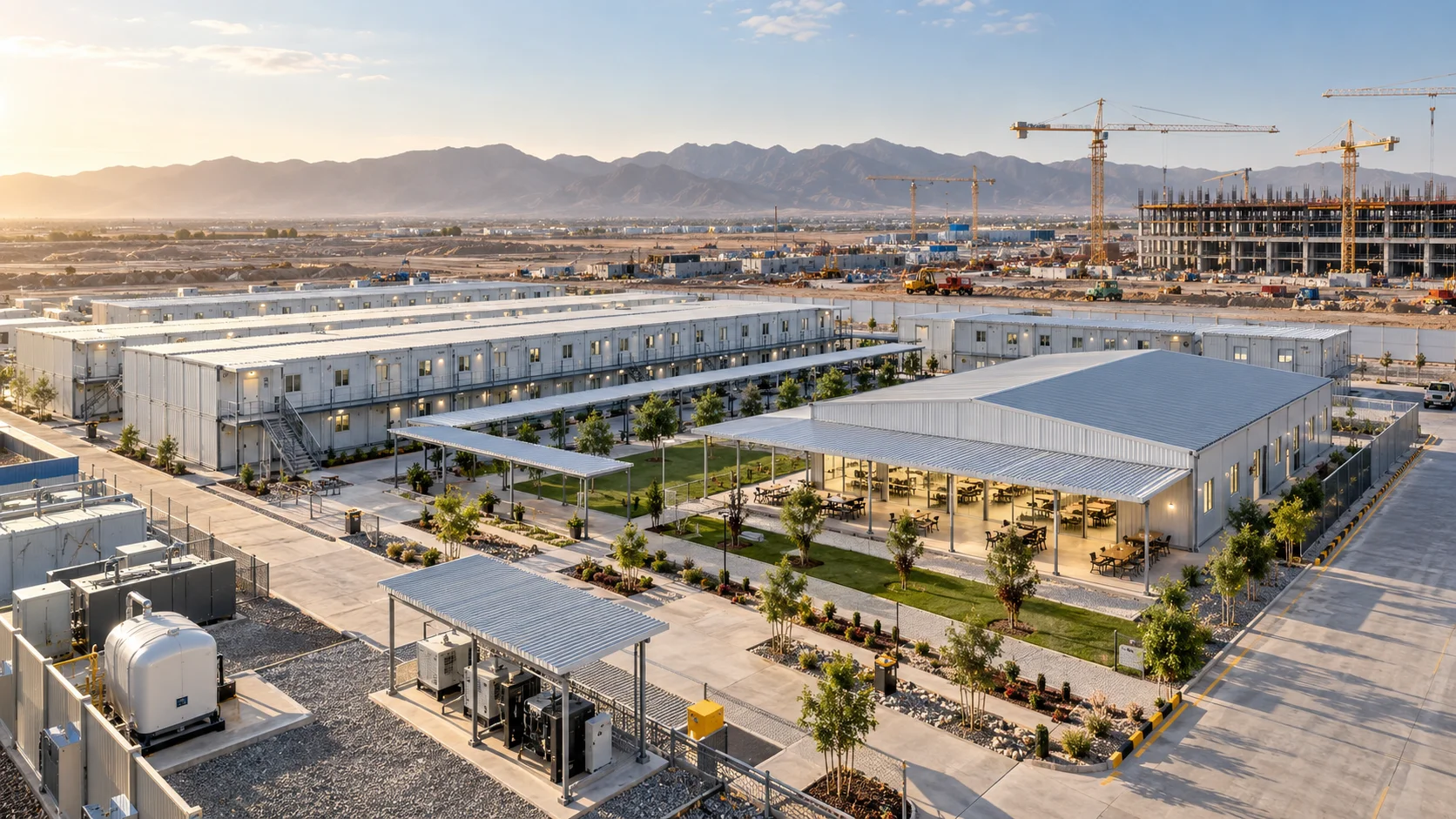
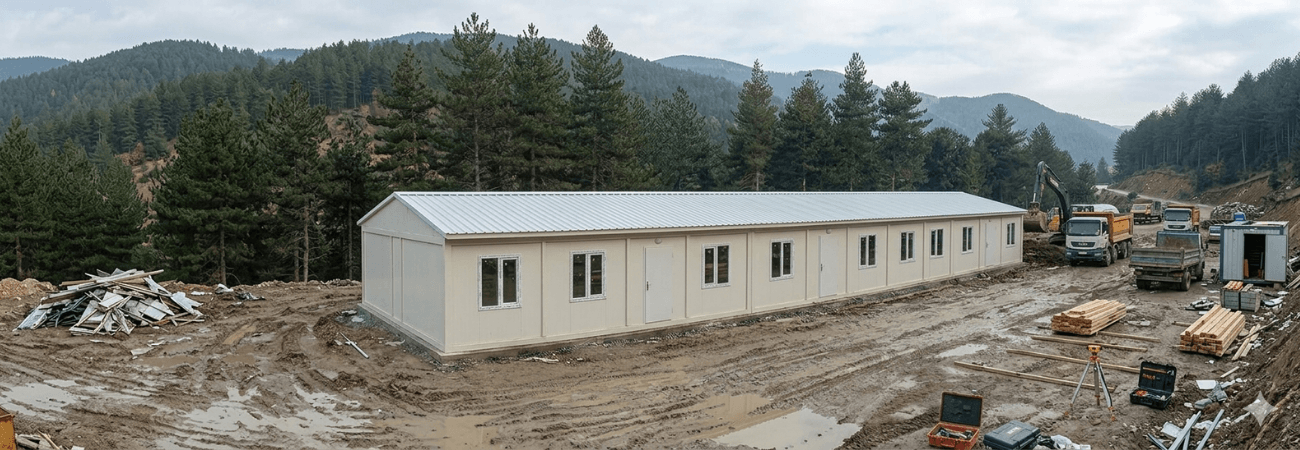
Operational areas such as construction sites, mining sites and military zones need versatile and functional building solutions. In such areas, prefabricated construction site buildings stand out for their practicality and cost-effectiveness. Manufactured in factories, these buildings can bring together different spaces such as offices, dormitories, dining halls, showers and toilets in a single structure. Since they are made from durable materials, they also offer long-term use. One of the most important factors determining the performance of these buildings is the insulation system. Insulation in prefabricated construction site buildings is generally carried out in three main stages.
1. Roof insulation
The roof is one of the most important parts of a building to insulate, because, contrary to popular belief, it is the part most exposed to heat and cold. That is why high-quality, long-lasting materials such as rock wool should be used in the roof. Sound insulation is also especially important in this section, which is why optional materials such as asphalt shingles are often chosen as the roofing material.
2. Wall insulation
After the roof, the walls are insulated. These buildings are produced with two walls, an inner wall and an outer wall, and high-quality, long-lasting materials such as EPS foam board are placed between them. This material prevents heat from passing through the walls, creating a more comfortable space inside the building.
3. The Importance of Windows in Insulation
After the walls and roof, one more element completes the insulation: the windows. They are generally PVC-framed and double-glazed. Because heat is trapped between the two panes of glass, heat transfer is prevented, providing thermal insulation throughout the building. In addition, all the materials used in the building generally provide sound insulation and waterproofing as well.
What Are Prefabricated Construction Site Buildings?
Prefabricated construction site buildings are modular structures that are manufactured in factories, shipped to where they will be used and installed in a short time. They are widely used not only at construction sites but also at mining sites, military areas and various industrial zones. Their most important feature is the ability to meet multiple needs within a single structure. Sections such as dormitories, offices, dining halls and hygiene facilities can be planned within the same building.
Advantages of Prefabricated Construction Site Buildings
Prefabricated buildings are preferred in many sectors thanks to the advantages they offer.
Affordable price
One of the best-known advantages of these buildings is their affordability. Because they are affordable, they are used in many different parts of Türkiye, and they can be purchased for all kinds of needs.
Multiple facilities in a single building
Compared to other buildings, these structures offer many different facilities under one roof, including offices, dining halls, dormitories, showers and toilets. For this reason, they are widely preferred in places with complex needs, such as military areas, construction sites and mining sites.
Durability
These buildings are manufactured to be highly durable, so they can be used for many years.
Customization
These buildings can be configured according to your requests and needs.
Insulation
When it comes to insulation, these buildings are insulated using high-quality, long-lasting materials.
Frequently Asked Questions
1. What is the difference between the EPS foam board and rock wool used in prefabricated construction site buildings?
EPS foam board is preferred especially in wall panels for its high thermal insulation and light weight, while rock wool offers both superior thermal insulation and high fire resistance (Class A1 non-combustibility) in the roof and ceiling sections. At Alyans Prefabrik, we optimize the density of these materials according to the climate conditions of the region where the site will be set up, ensuring maximum energy savings.
2. How are odor control and sound insulation achieved in complex site buildings (combined office, dining hall and dormitory)?
In projects where different functions share the same roof, special acoustic barriers and sealing gaskets are used in the partition walls. In dining and shower areas, professional ventilation systems are integrated to prevent odors and moisture from reaching the dormitory or office sections, providing a comfortable working and living environment.
3. How do PVC windows contribute to energy efficiency in prefabricated site buildings?
In prefabricated buildings, a large share of heat loss occurs through doors and windows. The double-glazed PVC window systems we offer as standard in Alyans Prefabrik construction site buildings eliminate thermal bridges. This system not only lowers heating costs in winter but also completes the sound insulation that personnel need in noisy environments such as construction sites.